Recognise and appreciate what they already have.
Le Village prépare la prochaine escale…
 Le Buntu VillageRead, discuss, pass on
Turn children’s attention towards non-material wealth: family, health, friendship, loyalty and generosity of heart.
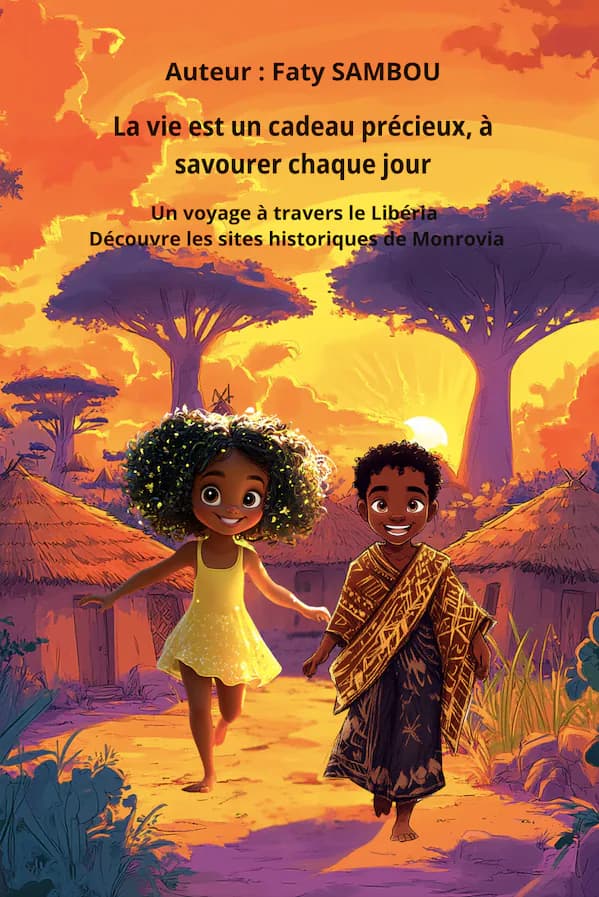
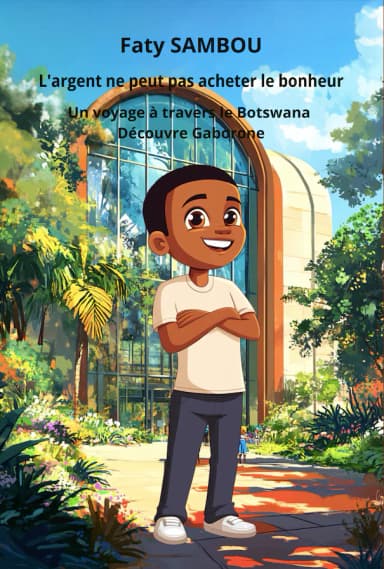
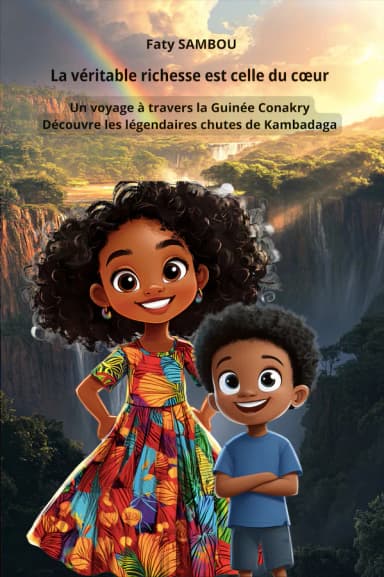
In Liberia, Maïa and Kofi learn again to savour everyday life. In Botswana, Kgosi finds in a museum visit a kind of wealth that objects alone cannot provide. Between France and Guinea, a family reconnects with its roots, memories and the strength of inherited bonds.
The pack does not condemn the wish to own things. Instead, it broadens a child’s definition of wealth: health, gratitude, family, experience and inner qualities become treasures that can be recognised and shared. The progression naturally opens a conversation about happiness and what makes it last.
The child's goal, translated into concrete progress.
Recognise and appreciate what they already have.
Understand that not everything valuable can be bought.
Value inner qualities before possessions.
The suggested order turns the pack into a mini-journey: start from a simple situation, then open the conversation towards the central value.
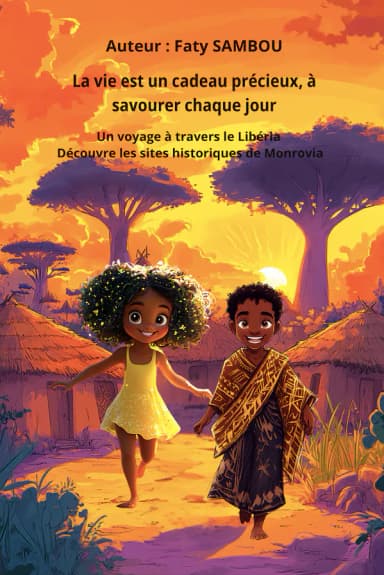
Liberia – Historic sites of Monrovia
From their village to Monrovia, Maïa and Kofi learn to savour life anew.
Between lush forest and the Atlantic Ocean, Maïa and Kofi live each day as an adventure. The nature surrounding their Liberian village already teaches them the beauty of simple moments. When a journey to Monrovia’s historic sites begins, the children discover a new way of seeing everyday life. The city connects them to their country’s history and ancestral roots. Following in the footsteps of those who came before helps them value the present. Their journey becomes an invitation to welcome every day with gratitude.
Question after readingWhich small moment in your day would you like to savour more fully?
Botswana – Gaborone
Kgosi experiences the museum differently, yet perceives what matters most.
In Gaborone, Kgosi, a visually impaired boy, visits the National Museum every week. His eyes cannot clearly distinguish the exhibits, but touch, imagination and careful listening open another path into Botswana’s history. Stories from his parents and Mrs Naledi bring the objects to life. As he discovers these treasures, Kgosi understands that no price can buy what brings him the greatest joy. Bonds, shared stories and received wisdom form a kind of wealth that money can neither create nor replace.
Question after readingWhat makes you happy even though it cannot be bought?
Guinea – Kambadaga Falls
From France to Guinea, a family sets out to rediscover its invisible riches.
In France, Ndioba and Alpha often tell their children, Melia and Tidjane, about the landscapes, traditions and stories of their native Guinea. A journey soon takes the family to the legendary Kambadaga Falls. Along the way, the children discover far more than a spectacular place: they connect with their roots and witness the bonds holding their family together. Their parents pass on an essential lesson. True wealth is measured not by possessions, but by love, generosity and the invisible treasures we share.
Question after readingWhich family bond or memory do you consider a treasure?
Ask them after the journey without expecting one single correct answer.
Which happiness in your day could not be bought?
What can an object offer, and what can it never replace?
Which memory or relationship feels like a true treasure to you?
Each story can be read independently. The suggested order nevertheless creates a progression: begin with an accessible situation, deepen the reflection and then connect the stories with the pack’s central value.
It contains 3 printed books and therefore 3 complete stories. The covers and book pages shown above correspond to the titles included in the selection.
Recommended uses include home, gift, discussion famille. The discussion questions work for individual reading, families, classrooms and workshops.
Home · Gift · Discussion famille